Home
/ Secondary Structure Of Protein - Secondary Structure Drives Self Assembly In Weakly Segregated Globular Protein Rod Block Copolymers Polymer Chemistry Rsc Publishing - We should be quite remiss not to emphasize that despite the popularity of secondary structural prediction schemes, and the almost ritual performance of these calculations, the information available from this is of limited reliability.
Secondary Structure Of Protein - Secondary Structure Drives Self Assembly In Weakly Segregated Globular Protein Rod Block Copolymers Polymer Chemistry Rsc Publishing - We should be quite remiss not to emphasize that despite the popularity of secondary structural prediction schemes, and the almost ritual performance of these calculations, the information available from this is of limited reliability.
Secondary Structure Of Protein - Secondary Structure Drives Self Assembly In Weakly Segregated Globular Protein Rod Block Copolymers Polymer Chemistry Rsc Publishing - We should be quite remiss not to emphasize that despite the popularity of secondary structural prediction schemes, and the almost ritual performance of these calculations, the information available from this is of limited reliability.. The secondary structure of proteins is maintained by hydrogen bonds between amide hydrogens and carbonyl oxygens of the peptide backbone. The primary structure, the secondary structure, the tertiary structure, and the quaternary structure. The bond angle is about 110°. The two most important secondary structures of proteins, the alpha helix and the beta sheet, were predicted by the american chemist linus pauling in the early. Learn about secondary structure of protein with free interactive flashcards.
The shape of a protein is critical to its function because it determines whether the protein can interact with other molecules. No fully formed protein exists at a primary or secondary level of structure. There are four levels of protein structure; Primary, secondary, tertiary, and quaternary. Different levels of protein structure viz., primary, secondary tertiary and quaternary are mere classifications for our understanding.
Four Types Of Protein Structure from www.thoughtco.com The secondary protein structure is the specific geometric shape caused by intramolecular and intermolecular hydrogen bonding of amide groups. Within each amino acid residue are two bonds with reasonably free rotation: The shape of a protein is critical to its function because it determines whether the protein can interact with other molecules. The basic unit of all of the structures is the amino acid sequence secondary structure of protein is formed from its primary structure, which in turns form the tertiary structure. Basic explanation of the secondary structure of protein. Learn about secondary structure of protein with free interactive flashcards. The major structural protein in the body, collagen makes up 25% of all vertebrate protein. The secondary structure of proteins is maintained by hydrogen bonds between amide hydrogens and carbonyl oxygens of the peptide backbone.
We should be quite remiss not to emphasize that despite the popularity of secondary structural prediction schemes, and the almost ritual performance of these calculations, the information available from this is of limited reliability.
There are four levels of protein structure; The secondary structure of proteins is maintained by hydrogen bonds between amide hydrogens and carbonyl oxygens of the peptide backbone. There are two types of secondary structures observed in proteins. Protein secondary structure is the three dimensional form of local segments of proteins. Each type of structure has a. Within each amino acid residue are two bonds with reasonably free rotation: The term secondary structure refers to the interaction of the hydrogen bond donor and acceptor residues of the repeating peptide unit. Learn about secondary structure of protein with free interactive flashcards. This is often simplified into models like the following one for the enzyme dihydrofolate reductase. The polypeptide chains present in a protein do not lie linearly nor they undergo random organization. These are globular and fibrous proteins. The major structural protein in the body, collagen makes up 25% of all vertebrate protein. The two most important secondary structures of proteins, the alpha helix and the beta sheet, were predicted by the american chemist linus pauling in the early.
The secondary structure of a protein is due to the folding of the polypeptide chain into different folds due to hydrogen bonding and vander waal forces. This is often simplified into models like the following one for the enzyme dihydrofolate reductase. Their structures, like their functions, vary greatly. Protein secondary structure is the three dimensional form of local segments of proteins. A protein is a functional biological molecule that is made up of one or more polypeptides that are folded/coiled into a specific structure.
The Four Levels Of Protein Structure Cie A Level Biology Revision Notes from v1.nitrocdn.com The secondary protein structure is the specific geometric shape caused by intramolecular and intermolecular hydrogen bonding of amide groups. We should be quite remiss not to emphasize that despite the popularity of secondary structural prediction schemes, and the almost ritual performance of these calculations, the information available from this is of limited reliability. Primary structure, secondary structure (alpha helix, beta plates, beta turns), tertiary structure, quaternary structure, bonds stabilizing different protein structures. What is the secondary structure of a protein? Basic explanation of the secondary structure of protein. Based primarily on hydrogen bonding patterns and some geometric constraints, it assigns every residue to. Learn about secondary structure of protein with free interactive flashcards. Primary, secondary, and tertiary structure are three, structural arrangements of proteins.
Within each amino acid residue are two bonds with reasonably free rotation:
The primary structure, the secondary structure, the tertiary structure, and the quaternary structure. Note the organization into many helical segments. Their structures, like their functions, vary greatly. What is tertiary for that matter? Based primarily on hydrogen bonding patterns and some geometric constraints, it assigns every residue to. Each cell in a living system may contain thousands of different proteins, each with a unique function. Primary structure, secondary structure tertiary structure and quaternary structure. No fully formed protein exists at a primary or secondary level of structure. This is often simplified into models like the following one for the enzyme dihydrofolate reductase. The secondary structure or secondary level of organization has been defined as the conformation present in a local region of the polypeptide or protein, stabilized through hydrogen bonds between the elements of the peptide bond. The polypeptide chains present in a protein do not lie linearly nor they undergo random organization. Protein secondary structure is the three dimensional form of local segments of proteins. Learn about secondary structure of protein with free interactive flashcards.
The nature of the bonds in the peptide backbone plays an important role here. Within each amino acid residue are two bonds with reasonably free rotation: Alpha helix and beta pleated sheet. The geometry assumed by the protein chain is directly related to molecular geometry concepts of hybridization theory. Learn about secondary structure of protein with free interactive flashcards.
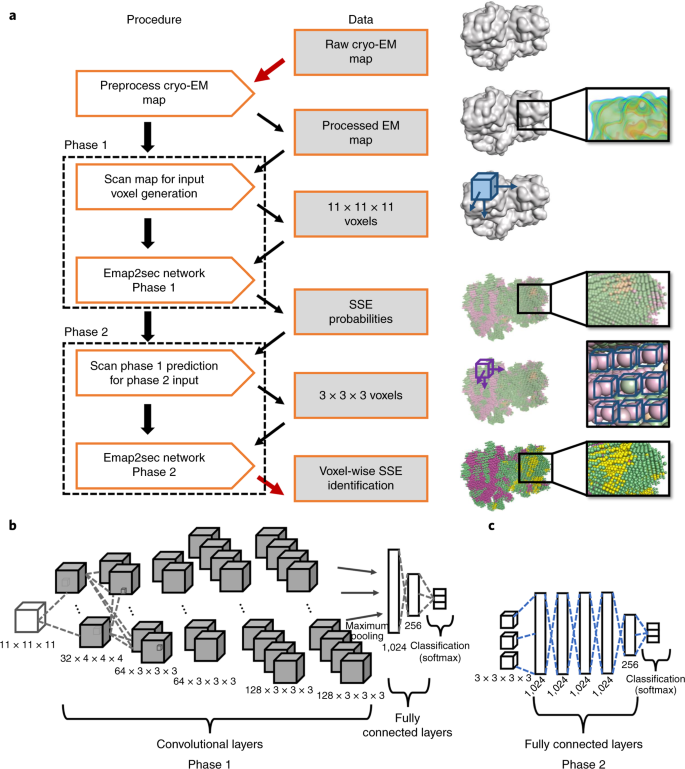
Protein Secondary Structure Detection In Intermediate Resolution Cryo Em Maps Using Deep Learning Nature Methods from media.springernature.com Protein structure can also be described by a level of organization that is distinct from the ones we have just how and why do proteins naturally form secondary, tertiary, and quaternary structures? What is the secondary structure of a protein? Based primarily on hydrogen bonding patterns and some geometric constraints, it assigns every residue to. Or they may be toxins or enzymes. The two most important secondary structures of proteins, the alpha helix and the beta sheet, were predicted by the american chemist linus pauling in the early. The secondary structure of proteins is maintained by hydrogen bonds between amide hydrogens and carbonyl oxygens of the peptide backbone. Alpha helix and beta pleated sheet. Each cell in a living system may contain thousands of different proteins, each with a unique function.
Within each amino acid residue are two bonds with reasonably free rotation:
The nitrogen and carbon atoms of a peptide chain cannot lie on a straight line, because of the magnitude of the bond angles between adjacent atoms of the chain; The secondary protein structure is the specific geometric shape caused by intramolecular and intermolecular hydrogen bonding of amide groups. We should be quite remiss not to emphasize that despite the popularity of secondary structural prediction schemes, and the almost ritual performance of these calculations, the information available from this is of limited reliability. Primary, secondary, and tertiary structure are three, structural arrangements of proteins. Protein structure can also be described by a level of organization that is distinct from the ones we have just how and why do proteins naturally form secondary, tertiary, and quaternary structures? What is the secondary structure of a protein? The basic unit of all of the structures is the amino acid sequence secondary structure of protein is formed from its primary structure, which in turns form the tertiary structure. Primary, secondary, tertiary, and quaternary. This question is a very active area of research and is certainly. Basic explanation of the secondary structure of protein. The polypeptide chains present in a protein do not lie linearly nor they undergo random organization. The two most common secondary structural elements are alpha helices and beta sheets, though beta turns and omega loops occur as well. The secondary structure of a protein is due to the folding of the polypeptide chain into different folds due to hydrogen bonding and vander waal forces.
/protein-structure-373563_final11-5c81967f46e0fb00012c667d.png)

/protein-structure-373563_final11-5c81967f46e0fb00012c667d.png&description=Secondary Structure Of Protein - Secondary Structure Drives Self Assembly In Weakly Segregated Globular Protein Rod Block Copolymers Polymer Chemistry Rsc Publishing - We should be quite remiss not to emphasize that despite the popularity of secondary structural prediction schemes, and the almost ritual performance of these calculations, the information available from this is of limited reliability.)